By Luna Ramírez
Environmental awareness refers to an understanding of the impacts of human behaviour on the environment and the importance of ensuring the protection of the environment. As the world faces increasing environmental challenges such as climate change, deforestation and loss of biodiversity, we must be capable of understanding how our actions can contribute to taking care of the environment.
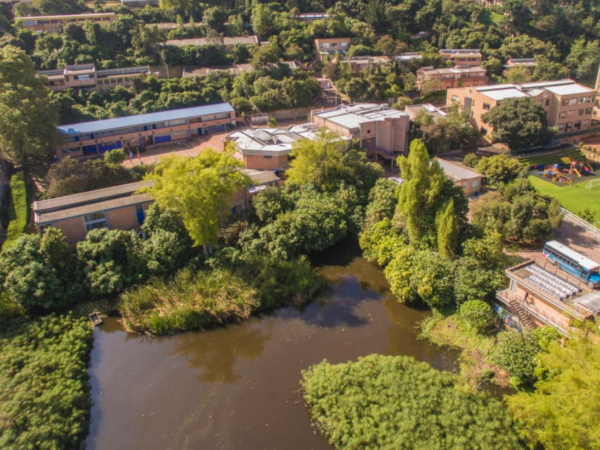
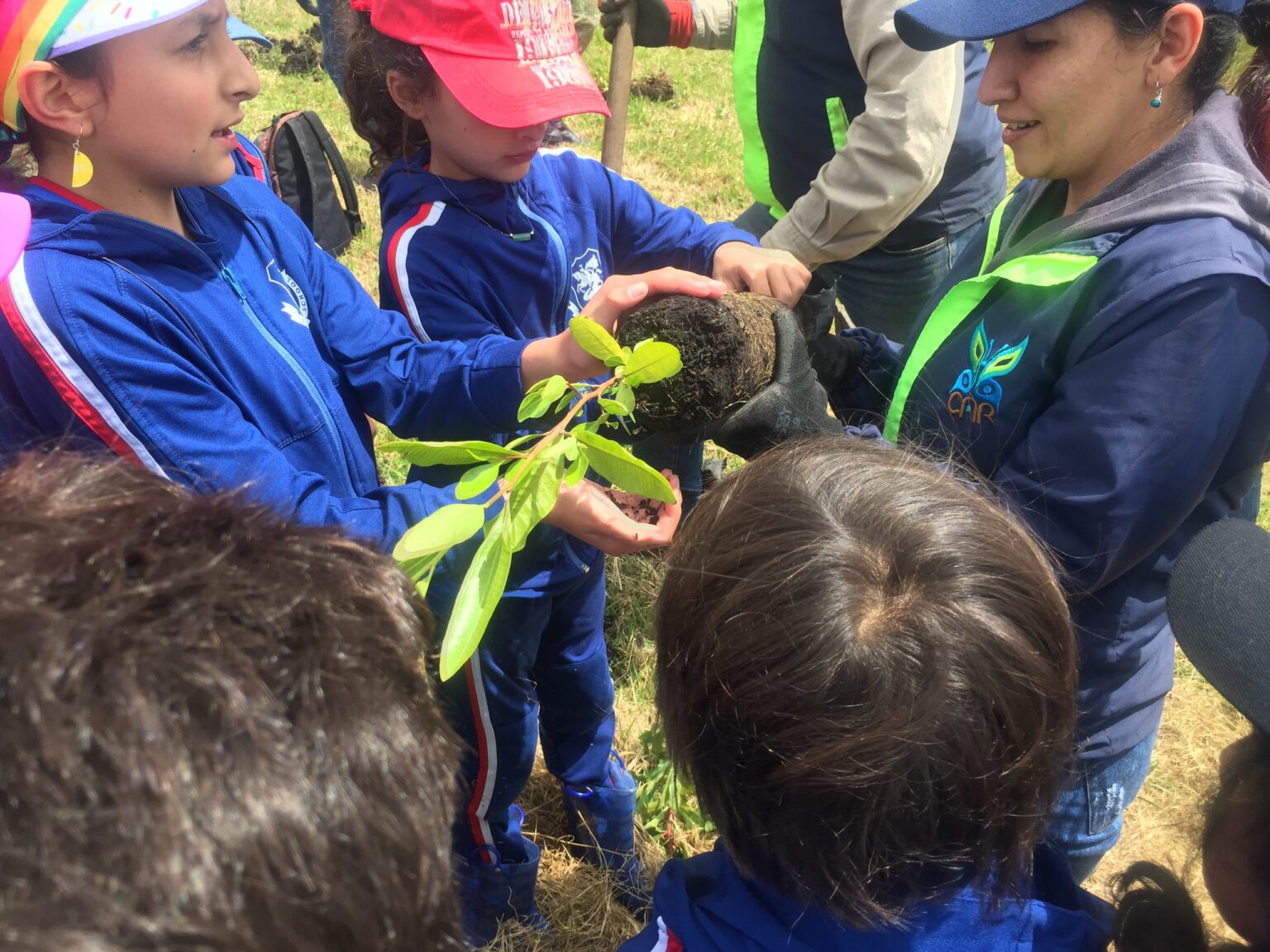
Environmental awareness is one of the most important differentiators of Saint George’s School, where students are encouraged to coexist with the ecosystems surrounding them, taking into account the principle of respect for all forms of life. The school implements environmentally friendly practices in order to reduce its impact on the environment.
At school, environmental awareness is implemented through different campaigns:
- Natural Reservoirs affiliated to RESNATUR (Asociación Red Colombiana de Reservas Naturales de la Sociedad Civil):
Saint George’s School is a wetland, giving refuge to a variety of species ranging from birds to fish and plants. The school has identified 50 species of birds and 208 species of plants among its different environments.
- PRAE (Proyecto Ambiental Escolar)
- COP in Bogota
- Ecological Committee
Survey Analysis
Most students in the SGS community (90 percent) know how to dispose of waste correctly. Students demonstrated knowledge of the type of waste disposed on the yellow bins (which is organic waste), that the waste disposed in the white bins are plastic, cardboard, as well as knowing the purpose for the black bin (it is the non-recyclable residues). In general, the student body knows how to dispose of these residues correctly, nonetheless in practice it is different as most students do not dispose of the residues correctly despite knowing how to, so it is very important that any time you are going to dispose anything, think thoroughly where to correctly throw it away. Moreover, the student body acknowledges that the residues generated by them is by far the most wasteful activity that happens in the school, with the residues from the food in the mornings and afternoon, paper, one-use plastics and much more. Nonetheless, there are no action plans or initiatives from the students against it, even though the impact is known not much action is taken.
On the other hand, the knowledge on how much the school recycles and where it does, such as the place water recollection is located or where to dispose the love bottles, is limited, more than 50 percent of the students do not know much about it. Only 57% of the students who answered the survey know the location of the rainwater recollection system and 63% know the location of the solar panels used for providing energy. Knowing the location and function of these mediums for environmental sustainability is fundamental to recognizing what makes our school environmentally friendly and conscious. These places teach us how to correctly dispose and what to do with the residues. Rainwater tanks collect stormwater runoff from impervious surfaces. Solar panels are located at both the Preschool building and recycling building, aiming to reduce our carbon footprint by implementing the use of renewable energy.
Water conservation plays an important role in ensuring health, sanitation and food security. Water is essential to most biological processes and for sustaining ecosystems, agriculture and other production processes also rely on water. The demand for water has increased exponentially over the past few decades as population has experienced rapid growth; however, we face a receding fresh water supply with only 3% of the world’s water supply being safe for human consumption, using water with responsibility becomes a priority. It is estimated water availability will be reduced to 1140 cum by 2050; during the last 100 years the rate of water utilization has been increasing by more than 200% the rate of population growth, by2025 two-thirds of the world’s population will be in water-stressed areas, and around 1.8 billion people will be in water-scarce regions.
Knowing how to recycle allows us to reduce the greenhouse gases produced as it prevents the trash from getting into landfills and it prevents pollution due to improper disposal of residues (water, air, sound….). Increasing the percentage of recycled residues is exceedingly important for the school, right now it only recycles 20 percent. We hope to achieve higher numbers in the future but we can only do it with your help, for a better functioning of recycling at school, students must understand how to dispose residues and where.
- What is ecology? Is it related to our role as citizens? Is it important in our daily life in school?
Ecology is a branch of science which studies organisms and their relationship to their environment, 48% of students recognized it as the definition of ecology, whereas 46% of students believe ecology is using resources in an environmentally friendly way. As citizens we have the responsibility of being conscious of our impact on the environment and how our interaction with it affects ecosystems; human activities account for one of the major threats to wildlife conservation and climate change, emission of Greenhouse gases is mainly
- How many birds there are in the School? Where can we find information (magia silvestre). Why are birds important?
As of survey results, 48% of students know our school is home to 50 different species of birds. Migratory birds tend to find refuge at our school’s lake, proving this environment to be essential for the conservation of species. Saint George’s School published “Magia Silvestre”, a book containing all the species found within the school’s environments. Bird conservation proves relevant as birds form important part of ecosystem processes, they are major actors in seed dispersal, plant pollination and insect or rodent control.

How good is our environmental awareness? Should we improve? How? When? Why?
The results of the survey portray deficiencies in the understanding of environmental campaigns at school, particularly those related to recycling and location or function of school facilities for the reduction of waste. Our student body shows an understanding of recycling processes.
What can we do in our daily life and how the newspaper will help?
Understanding environmental issues and changing our lifestyles towards more sustainable means of subsistence is essential to ensuring sustainable development. Through making conscious choices on what we consume, how much resources we use and how we dispose of residues we can reduce our impact on the environment. Reducing water and energy consumption through collecting rainwater, ensuring no lights are on when not needed and taking short showers; having specific-colored bins for different types of residues, recycling (separating plastics and contributing to the “Love Bottles campaign”); consuming goods with minimal packaging and less environmentally hazardous components (aerosols for example); and taking active roles on environmental campaigns
The newspaper provides a medium through which students can become active members of environmental campaigns and develop a better understanding of environmental issues and their relevance to quality of life, biodiversity, human rights and economy.